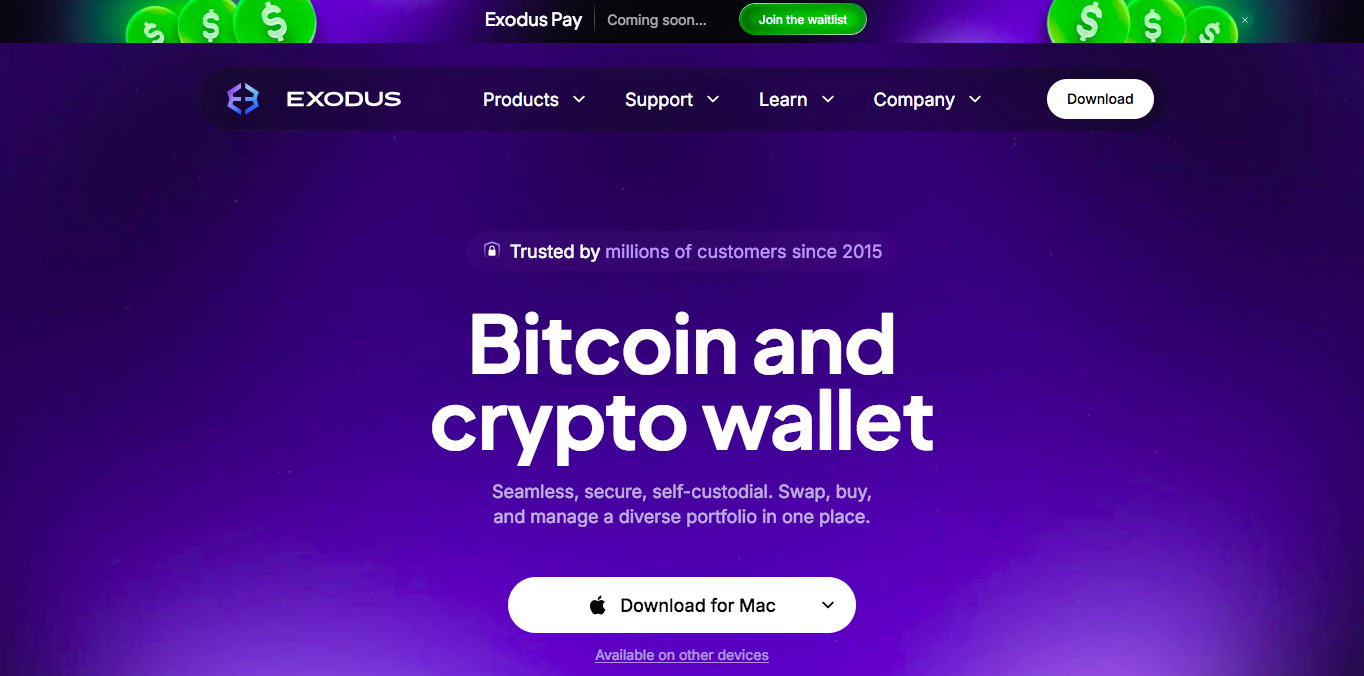
Exodus Wallet – Detailed 500-Word Content
Exodus Wallet is a non-custodial cryptocurrency wallet that provides users with a secure and convenient way to store, manage, and exchange digital assets. Since its launch in 2015, Exodus has gained significant popularity due to its intuitive interface, strong asset support, and built-in features that simplify crypto management. It is designed to serve both beginners entering the cryptocurrency space and experienced users looking for a streamlined portfolio management tool.
As a non-custodial wallet, Exodus ensures that users maintain full control over their private keys. Private keys are encrypted and stored locally on the user’s device rather than on company servers. This means that only the wallet owner has access to their funds. Unlike centralized exchanges, Exodus does not hold customer assets or require extensive personal information. This structure enhances user privacy and reduces reliance on third parties, though it also means users are fully responsible for safeguarding their recovery phrase.
Exodus supports a wide variety of cryptocurrencies, including leading assets such as Bitcoin (BTC), Ethereum (ETH), Solana (SOL), Cardano (ADA), Litecoin (LTC), and many ERC-20 tokens. With support for hundreds of digital assets, users can diversify their investments and manage multiple coins within a single application. The wallet also provides real-time price tracking and a visually appealing portfolio overview, helping users monitor market movements and overall asset performance.
The wallet is available on desktop platforms including Windows, macOS, and Linux, as well as mobile devices running iOS and Android. One of its key strengths is cross-device syncing, allowing users to manage the same wallet across desktop and mobile seamlessly. This feature offers flexibility and ensures users can access their funds anytime.
A major highlight of Exodus Wallet is its built-in exchange feature. Users can swap one cryptocurrency for another directly within the wallet interface. This eliminates the need to transfer funds to an external exchange, simplifying the trading process and reducing potential security risks. While this integrated exchange offers convenience, fees may be slightly higher compared to dedicated trading platforms.
Exodus also provides staking capabilities for selected cryptocurrencies. Staking allows users to earn rewards by helping maintain and validate blockchain networks. Through a simple and user-friendly interface, users can stake supported coins, track rewards, and manage their staking positions. This feature is particularly attractive for long-term investors seeking passive income opportunities.
Security is a central component of Exodus Wallet. During setup, users are provided with a 12-word recovery phrase that acts as a master backup. This phrase is essential for restoring access if the device is lost, stolen, or damaged. It must be stored securely offline and never shared. For enhanced protection, Exodus integrates with the Trezor hardware wallet, allowing users to store private keys offline while managing funds through Exodus’ interface.
In summary, Exodus Wallet combines simplicity, security, and functionality into a comprehensive crypto management platform. With broad asset support, built-in exchange services, staking options, and hardware wallet compatibility, it offers a well-rounded solution for individuals seeking reliable and user-friendly cryptocurrency storage.